May 27, 2013
and seeing is not simple
"and seeing is not simple. to see deeply enough to capture the vibrancy of life on the page, a writer must move her consciousness out of information-organizing mode into an intuitive way of seeing subtle organic connnections & capturing them in bold strokes."
-rachel howard, gesture writing
nytimes.com/opinionator
the pagan angel plays in the park
each shrouded other, born in pure daylight, worships a whirlwind of dust. an angel who loved the earth too much, who could not say no to his base lust, emerges home, inside the park, to defeat the altitude they brought. he stole & stole, voracious for bases, victory conjured from the dirt, defeating those mountains by staying low beneath their altitude, whizzing beneath their peaks. sorcerer teammates surprised their gigantic spell worked while a lone man buried deep in his cap, paces behind the scene, measuring the seam of his loss.
Flowers from a New Love after the Divorce by Paisley Rekdal
Cut back the stems an inch to keep in bloom.
So instructs the florist’s note
enclosed inside the flowers.
Who knew what was cut
could heal again, the green wounds close,
stitching themselves together?
It doesn’t matter. The flowers, red
and white, will bloom awhile, then wither.
You sit in an unlit room and watch
the vase throw crystal shadows through the dark.
The flowers’ colors are so lovely they’re painful.
In a week, you’ll have to throw them out.
It’s only hope that makes you take out scissors,
separate each bloom and cut
where you last measured. Did you know
Venus was said to turn into a virgin
each time she bathed? She did it
as a mark of love. She did it
so as to please her lovers. Perhaps,
overwhelmed by pain,
she eventually stopped bathing
altogether. It doesn’t matter. It’s a pleasure
to feel the green nubs stripped, watch the stems
refresh under your blade. They’re here
because they’re beautiful. They glow
inside your crystal vase. And yet
the flowers by themselves are nothing:
only a refraction of color that,
in a week or two, will be thrown out.
Day by day, the water lowers. The red-
and-white heads droop, blacken at the stems.
It doesn’t matter. Even cut stems heal.
But what is the point of pain if it heals?
Some things should last forever, instructs
the florist’s note. Pleasure,
says one god. Shame, says another.
Venus heads, they call these flowers.
In a week or two, you’ll lose the note,
have to call the florist up.
With sympathy, you’ll think he says.
Perhaps: With love. It doesn’t matter.
You’ve stopped bathing. Alone,
you sit before the crystal
vase refracting you in pieces
through the dark. You watch
the pale skin bloom inside it, wither.
You petal, inch by inch.
You turn red and white together.
Paisley Rekdal, “Flowers from a New Love after the Divorce” from Animal Eye. Copyright © 2012 by Paisley Rekdal.
April 29, 2013
poem by inger christensen "From A Letter In April"
The palm tree is strong
as the wind is green.
The rage we once
called holy.
The language that once
had a direction.
The future that once
rebounded
onto us.
The indifference now
that I myself have come along
around the sun
forty-four times.
The indifference now
that the closed cycle
opens its doors.
The indifference
in this insufferable
image of reality.
Teach me to repeat
the future now,
while we are being born.
Let my mind fly up
into its nest
in the depths
of the rustling crown.
Let the eggs shine
with an afterglow
like milky sun.
Let the wind be green
and sorrow slaked.
*
A sorrow
that speaks
in clusters
of concealing
light.
So simply that light
gets the eye to see
that it is light
in the rustling
darkness.
So simply
that light is as fast
as the eye is a hole.
So easily
when the closed cycle
opens its doors,
as easily as anything,
as in the distant
acacias'
glowing
grave mounds,
the world
so killed
and buried
then and there
in light,
light
that stands still,
so easily
in April
in the April
of pain
when acacias
see me
as my mother did
when I was born.
And while I draw
and map out
whole continents
between kin
and sorrow,
the revolution turns,
hanging suspended,
and the feeling
that never leads out
is for a moment
outside
itself
and illuminated
in the dead,
inconsolable
visible
and the silence
has doors everywhere.
translated from the Danish by Susanna Nied
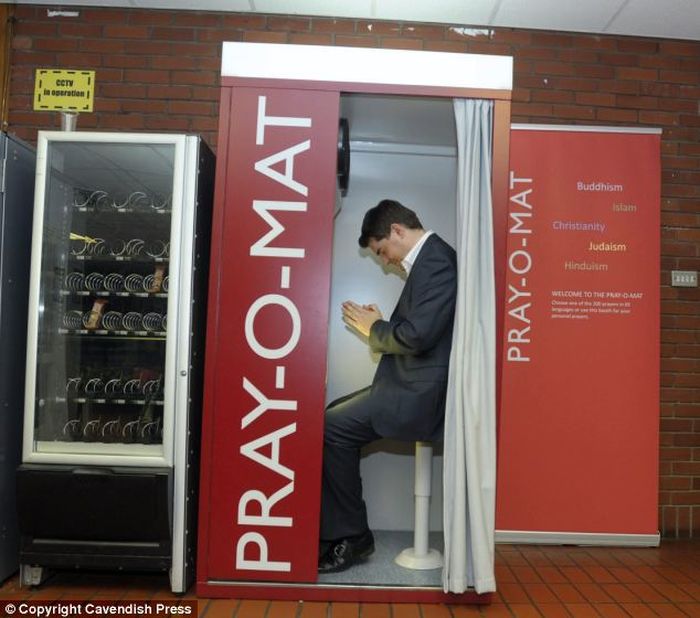
mythological booth
where the word spoken aloud takes you, hypertexts you. how a phone call flips the hood up, pulling the cloud down to separate us with sheets, every call comes with an invisible booth - we step into its confessional, as most calls are, and we are the actors who pretend so thoroughly on any improvised stage that they believe whatever isn't really there as a matter of convenience, or is it a deal made in the chapel we sought refuge in, silence for some, support for others, a station for the confidence men to fill up again, to verify ourselves by rethreading the story with our narrative masters, to travel through time, these are the powers unleashed with buttons, pressed to exit. a code that solves our identity, a spell to manage the merge, to delineate self from selves, to preserve the particle of our presence here, carved, cut, the weld broken, scraped like an outline chalked on the street. the instrument that saves us from being swirled, but fleeing the prisoners in your cell without really escaping the jail itself only strands you in the smallest self, the soul's cult and every phone call is a make believe island you are waving on, or is it the raft you bought to flee the island? the fence you wear that allows you to reach out from whose gate is locked, depends on our suspension of disbelief, as if you were protected by your hand held company, as if you were safe with that thing in your ear, that plastic leach pressed against your cheek, feeding on psychic scraps, that wears you as walk, that sits you down and pulls you from you, as if you carried your own door, a portable emergency exit kept in pocket or purse, as if you didn't already carry your own door, or perhaps it's really a door for the doorless, a door for those who could never find the one inside because it was too dark in there and maybe they fell down the steps and got lost once and couldn't fumble their way back out and so now they carry a door they can always find, that leads out instead of in, as they are getting to know themselves out loud.
April 14, 2013
Tanka by Ki no Tsurayuki (868-945 AD)
Although my feet
Never cease running to you
On the path of dreams,
Such nights of love are never worth
One glimpse of you in your reality.
Ki no Tsurayuki (868-945 AD)
fragment from “Calmly We Walk Through This April’s Day” by Delmore Schwartz,
Each minute bursts in the burning room,
The great globe reels in the solar fire,
Spinning the trivial and unique away.
(How all things flash! How all things flare!)
What am I now that I was then?
May memory restore again and again
The smallest color of the smallest day:
Time is the school in which we learn,
Time is the fire in which we burn.
by Delmore Schwartz, from “Calmly We Walk Through This April’s Day”
Subscribe to:
Posts (Atom)